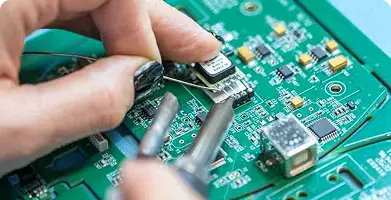
Montréal has a strong ecosystem for hardware innovation.
Between makerspaces, engineering firms, manufacturers, and prototyping studios, teams have many options — and that can make the first decision surprisingly unclear.
This article explains what hardware prototyping typically looks like in Montréal, what different types of providers offer, and how to choose the right path depending on your goals.
The Montréal hardware landscape (in simple terms)
Most hardware projects in Montréal fall into one of three environments:
- Makerspaces and fab labs
- Manufacturing and assembly providers
- Hardware prototyping studios
Each plays a useful role — but they serve very different needs.
Makerspaces: learning and early exploration
Montréal has an active makerspace community.
These spaces are ideal if your goal is to learn, experiment, or build things yourself.
They typically offer access to tools such as soldering stations, 3D printers, CNC machines, and shared knowledge from other members.
Makerspaces work well when:
- Your primary constraint is budget
- You want hands-on learning
- Timelines are flexible
They are less suitable when you need a reliable, externally validated prototype with clear deliverables.
Manufacturers and EMS providers: building what is already defined
Montréal and the surrounding region also host many electronics manufacturers and PCB assembly services.
These companies excel at building hardware once designs are mature and specifications are clear.
They are optimized for execution, repeatability, and quality control.
They are a good fit when:
- Your design is finalized
- You need prototypes or small production runs built accurately
- Engineering decisions have already been made
They are not typically set up to help define architecture, explore alternatives, or reduce early technical uncertainty.
Hardware prototyping studios: reducing risk early
Hardware prototyping studios sit between experimentation and manufacturing.
Their role is to help teams move from an idea to a functional, testable prototype — without requiring them to become hardware experts.
In Montréal, prototyping studios typically focus on:
- Early feasibility and architecture decisions
- Functional electronic prototypes
- Embedded firmware and basic mechanical integration
- Clear documentation and next-step recommendations
This approach is especially valuable for startups, innovation teams, and companies building hardware for the first time.
What timelines usually look like
For early-stage hardware projects in Montréal, a first functional prototype often takes several weeks, not days.
This includes time to:
- Clarify constraints and assumptions
- Select appropriate components and architecture
- Build, test, and iterate on a working system
Projects that move faster tend to do so because decisions are made intentionally, not because steps are skipped.
Local presence, global collaboration
One advantage of working with Montréal-based teams is access to local expertise, suppliers, and in-person collaboration when needed.
At the same time, many hardware prototyping studios operate comfortably with clients across Canada and the United States.
The work itself is often a mix of remote collaboration and targeted on-site sessions.
What matters most is not where the studio is located, but how clearly it structures decisions and communicates trade-offs.
Choosing the right path
A useful way to choose between options is to ask:
- Are we trying to learn, or to validate?
- Do we need tools, or decisions?
- Is our main risk technical, or operational?
The clearer these answers are, the easier it becomes to choose the right partner.
Final thought
Montréal offers a rich hardware ecosystem.
The challenge is not finding help, but finding the right kind of help at the right moment.
Teams that align their choice with their stage tend to move faster, spend less, and avoid unnecessary detours.
Atallis works with teams in Montréal and beyond who need clarity, reliable early hardware decisions, and functional prototypes — without turning exploration into a long-term distraction.