There is a version of this story that plays out more often than most teams would like to admit. A startup builds its first working prototype, the demo goes well, investors are interested, and everyone in the room walks away thinking the hard part is behind them. Then the real engineering begins, and almost nothing is as settled as it seemed.
A working prototype is not proof that a product works. It is a tool for narrowing uncertainty.
What a Prototype Is Actually Doing
When you build a prototype, you are making a small number of technical questions answerable. You are not answering all of them at once.
An early prototype might confirm that a sensor can detect what you need it to detect. That is worth knowing. But it does not tell you whether that sensor will behave the same way across a thousand units, after six months in the field, across the temperature range your product will actually see. Those are different questions. They require different work.
This is not a failure of prototyping. It is just what a prototype is scoped to do. Each one targets a set of unknowns. You build it, learn what you set out to learn, and move to the next round of questions.
The problem comes when teams treat a prototype as a finished answer rather than a structured experiment. That mindset leads to skipped validation steps, optimistic schedules, and manufacturing surprises that could have been caught earlier.
The Gap Between a Working Demo and a Reliable Product
A prototype that works in controlled conditions is not evidence that a product will work in the field. This gap is one of the most consistent challenges in hardware development, and it is worth being direct about why.
Three things are largely invisible in a prototype:
- Reliability. A component might perform cleanly across ten cycles and fail unpredictably across ten thousand.
- Thermal behavior. A device can stay within acceptable limits during a short demo and accumulate heat in ways that cause problems during sustained operation.
- Power draw. Real usage patterns are almost never what bench testing suggests, especially once the full firmware stack is running and radios are active.
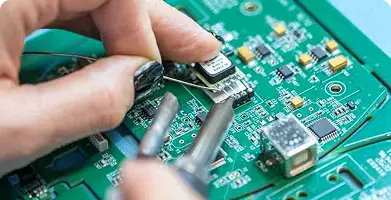
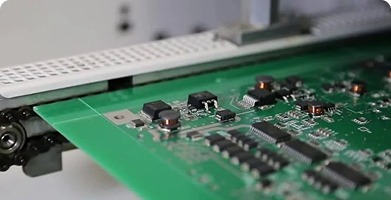
Then there is manufacturability. A prototype is typically assembled by hand, with parts sourced for availability rather than volume. The decisions that make a prototype fast to build are often exactly the decisions that cause problems when the process is automated and hand-tuned tolerances disappear. A connector orientation that an engineer can manage manually becomes a line stoppage at scale.
None of this means prototyping is wasteful. It means each prototype is answering a specific set of questions, and the questions around reliability, thermal headroom, and production readiness come later — through more rigorous testing and deliberate iteration.
Different Prototypes, Different Purposes
Not every prototype is built to validate technical assumptions. This distinction trips up a lot of teams, partly because the word “prototype” covers things that are serving entirely different functions.
Demonstration Prototype
Built to communicate a concept. Works well enough to show how the product is intended to behave. May use off-the-shelf modules, workarounds, or manual steps that would never survive in a shipping product.
Purpose: Make an idea tangible — for investors, early users, or internal alignment.
Validation Prototype
Built to test whether a specific technical approach actually holds up. Meant to be stressed, questioned, and sometimes broken.
Purpose: Find problems before they become expensive.
Conflating these two is a real and common source of confusion. A demo is a best-case scenario, not a stress test. It proves that a path might be viable — not that it is.
What Happens After the Prototype
The post-prototype phase is where hardware development gets harder to manage, and where early decisions compound. Here is what typically surfaces:
- Firmware rework. Code written quickly for a prototype usually needs significant revision for production — interrupt handling, low-power states, watchdog behavior, over-the-air update reliability.
- Power constraints. Optimization that felt like something to tackle later starts constraining hardware decisions that are increasingly difficult to revisit.
- Component lead times. The part you chose for availability has a six-month lead time at production volumes.
- Mechanical tolerances. The enclosure that looked right in CAD deforms slightly during drop testing, and now a connector alignment is marginal.
None of this means the prototype failed. It is the normal progression of hardware development. But teams that believed their prototype proved the product would work tend to experience this phase as a crisis rather than an expected part of the process.
The teams that handle it better understood from the beginning that the prototype answered a few important questions and left many others open. They planned for another round of work. They did not build their schedule around the assumption that a successful demo was a finish line.
What Prototypes Are Actually Good At
This is not an argument against prototyping. Prototypes are among the most valuable tools in hardware development, precisely because they make abstract decisions concrete. Specifically, they:
- Surface integration problems that no amount of review on paper would catch
- Reveal things about user experience that a specification document would never expose
- Force engineering decisions to become real, exposing assumptions that were never examined
- Help teams align on what the product should actually do, early enough to matter
The discipline is in being honest about what each prototype is scoped to answer, and what it is not. A prototype that confirms your sensing approach works as intended is good news. It is not confirmation that you have a manufacturable, reliable, production-ready product. That work is still ahead.
A More Useful Mental Model
Think of hardware development as a series of progressively more demanding questions.
Early questions
- Can this be made to work at all?
- Does the interaction feel right in the hand?
- Is the core technical concept feasible given the constraints?
Later questions
- Does it work consistently across units and environments?
- Does it survive real use patterns and accelerated aging?
- Can it be manufactured with acceptable yield?
- Does it meet regulatory requirements for target markets?
No single prototype answers all of these. The teams that move through hardware development well are the ones who know which question they are currently trying to answer, build the artifact or test that addresses it, and then move to the next question with clear eyes about what is still open.
The goal is not to prove that the product works. The goal is to reduce uncertainty in a structured way, one round of work at a time.
That is what prototypes are actually for.